
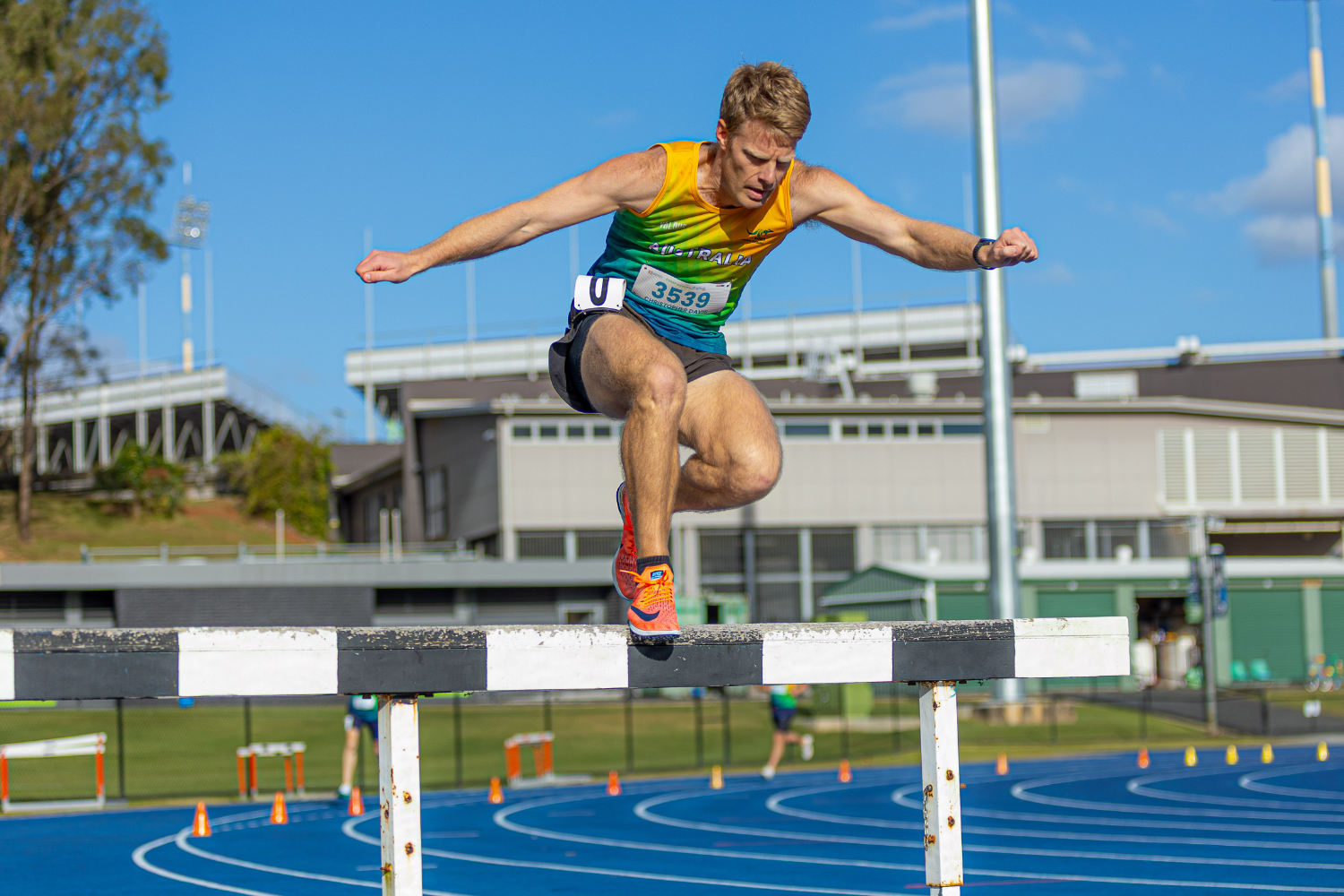
Featured Event
Steeple
chase
Athletics has exactly one obstacle course, known as the steeplechase. It is also the only track and field event where you get to jump into a nice, cool body of water.
- Distance
- 3000m or 2000m
- Obstacles
- 28 barriers and 7 water jumps over 3000m
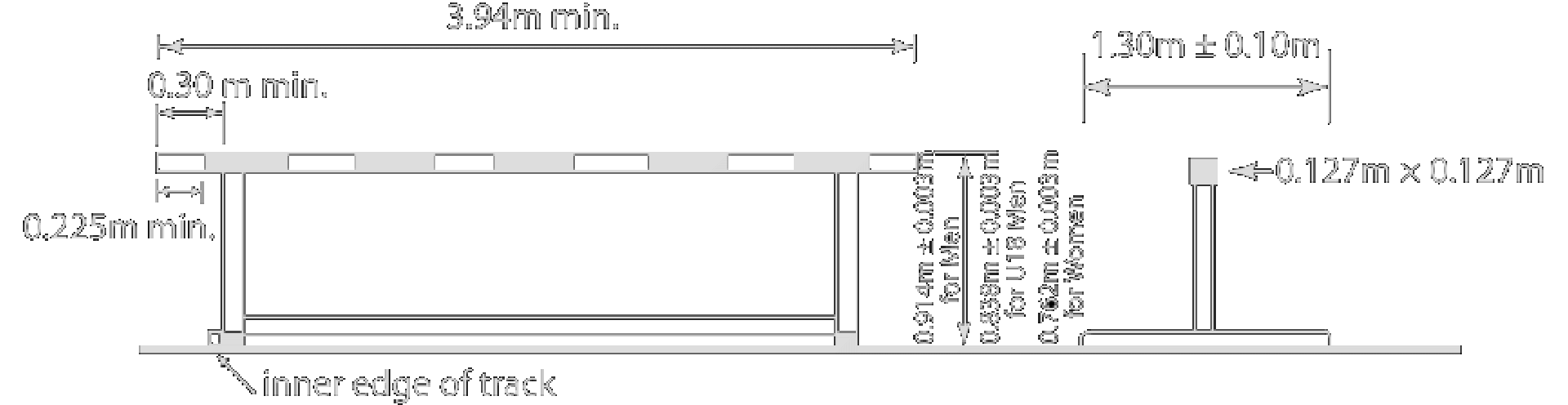
- Barrier height
- 76.2cm to 83.8cm
- Open to
- Every age group from 30
Potentially, then, every Queenslander’s new favourite event over summer.
It combines running and jumping, or climbing, over barriers. If you are new to athletics and are coming to us from the gym or from an endurance sport, this might be the track event to try.
Where it came from
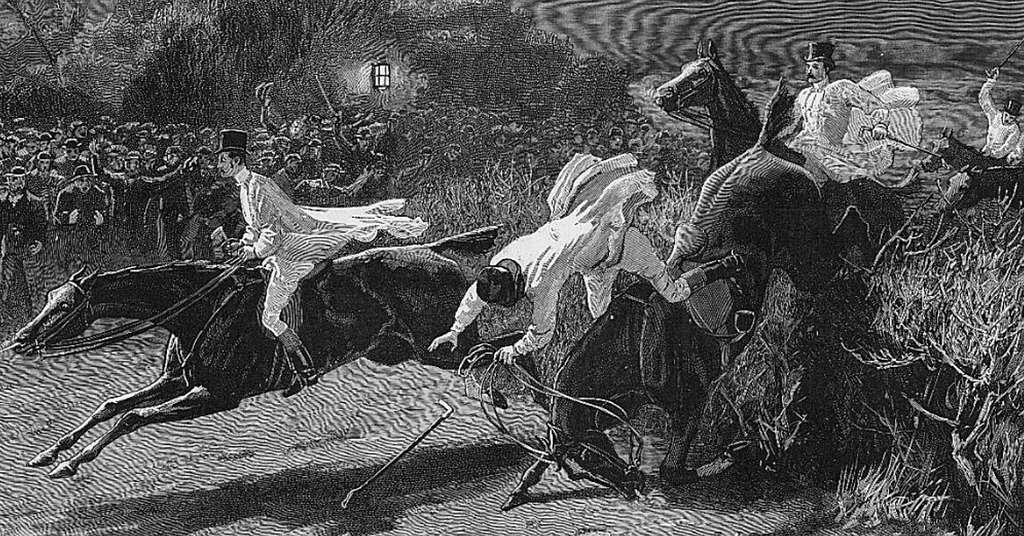
Not to be confused with the horse race, although some histories record that the human version came out of mounted fox hunting. If it was a slow hunting day, to keep things interesting, participants would race their horses cross-country instead, selecting the nearest church steeple in eyeline and riding towards it as fast as possible, going over or through all barriers on the way.
This was in Ireland, where there are a great many more churches and, presumably, fewer foxes.
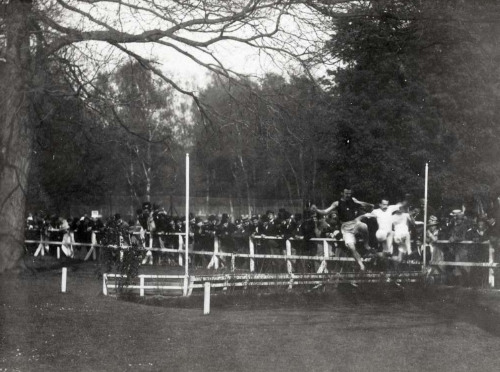
The people-only race evolved from there, first appearing as a mens event at the Olympics in the 1920s. Women did not get an Olympic version until Beijing in 2008.
Open event rules
- Total distance 3000 metres: five barriers per lap, one of which is the water jump, over seven laps.
- The water barrier may be located inside or outside the 400m track. At QSAC in Brisbane it is outside.
- You have to go over the barrier, but if you cannot clear it with a hurdle jump you may touch the barrier with any part of your body, such as your feet or your hands.
- Standard standing start. Wait for the starting gun before moving off.
- The winner owns the torso that crosses the line first.
How masters differs
- M30 to M59 clear 83.8cm barriers over 3000m: 28 barriers and 7 water jumps. They used to be 91.4cm, the same as the elite men, until they were lowered in 2023.
- M60 and above, and women of every age, clear 76.2cm barriers over 2000m: 18 barriers and 5 water jumps.
Over, or onto, and off
And the best part - you can basically do whatever you like to get over the barriers at masters. Plenty of athletes, even at nationals put both hands on the barrier, sometimes even sit on it and swing their legs over. You don't have to worry about trying to hurdle them or being in a tight pack like the Olympics (to be honest I'm about the only masters athlete in the country who hurdles them...)
To perform well in the event, it requires a high level of fitness, as it is significantly more fatiguing than a flat track race of the same distance. Getting over the steeples requires the effort of jumping, but also landing - putting additional strain on your body. This requires a strong core, and also strength in your legs to avoid collapsing on impact - costing you time, but also increasing injury risk.
I personally love it because of the additional technical element to the pretty simple sport of middle distance running.
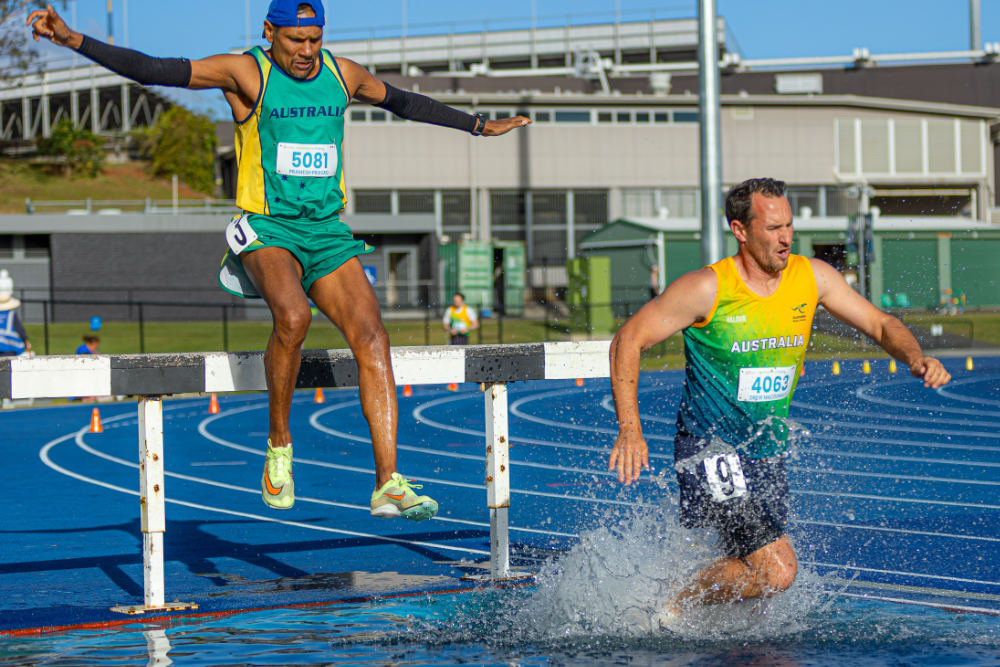
Three reasons to give it a go
But if you want some reasons to get involved:
- No other event allows you to cool off in the water jump every lap.
- Photographers love the event, so you get some sweet action shots.
- Very few athletes compete in it - a medal is almost guaranteed, even at nationals!
Chris tells us: 'If they're not reasons to get involved, I'm not sure what else will!' We couldn't agree more.
The world records
Men's 3000m
7:52.11
Lamecha Girma, Ethiopia, 2023
Women's 3000m
8:44.32
Beatrice Chepkoech, Kenya, 2018
Want the record for your own age group? See the Queensland records, or read the World Athletics rules for the 3000m steeplechase.
Watch and learn
Thank you to Christopher Davis, who provided the masters perspective on the steeplechase. Action photographs by Jo Harlow. Historical images are in the public domain.
Fancy the water jump?
Steeplechase runs on the QMA programme for every age group from 30. No qualifying time, and very little competition.